
I’m an extreme non-credentialist – what about you?

Photo by Good Free Photos on Unsplash
I'm an extreme (>99th percentile) non-credentialist. Does that mean if I find out someone has a nutrition Ph.D., then I don't think they know more about nutrition than most random people? Of course not. Credentials are evidence of what someone knows (e.g., having a nutrition Ph.D. is evidence that you have nutrition knowledge). But part of what makes me an extreme non-credentialist is that if I spend an hour watching someone with a nutrition Ph.D. debate a completely self-taught person, a...
More

The many ways to make inferences

Photo by Nong V on Unsplash
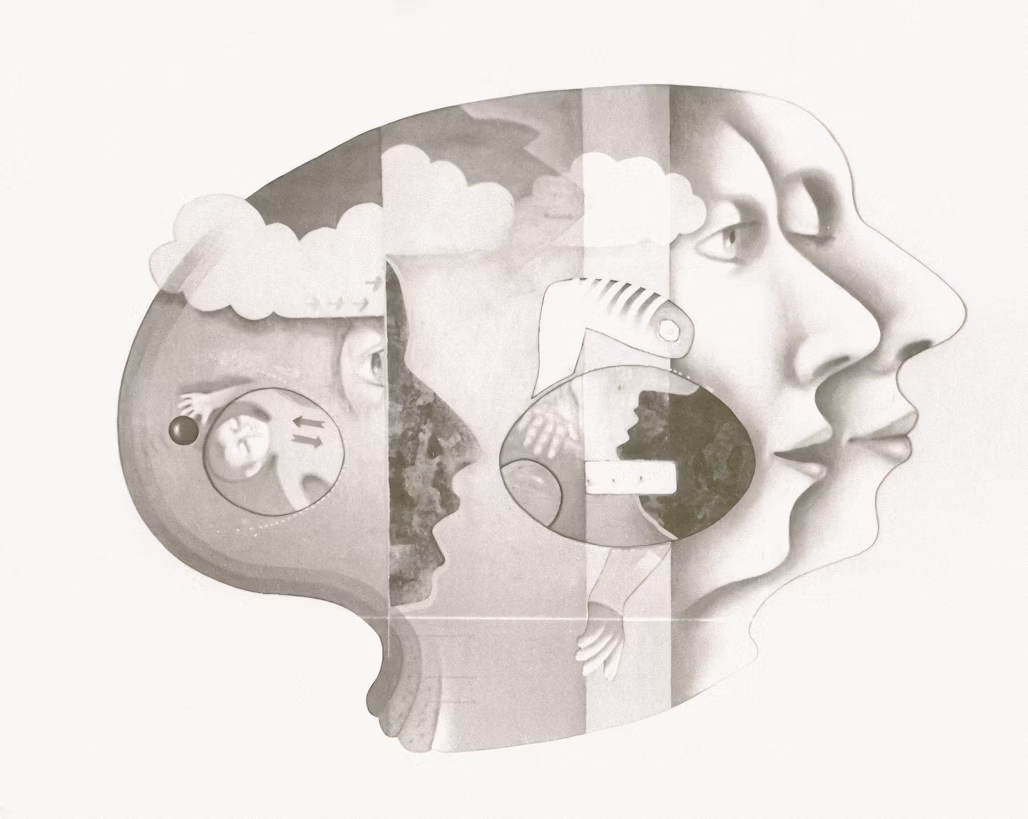
There are a LOT of ways to make inferences. Many more, I think, than is generally realized. And they all have their weaknesses. You can make inferences using… (1) Deduction: As a consequence of the definition of X and Y, if X then Y. X applies to this case. Therefore Y. “Plato is a man, and all men are mortal; therefore Plato is mortal.” “For any number that is an integer, there exists another integer greater than that number. 1,000,000 is an integer. So there exists an in...
More

Ways to develop new hypotheses about human psychology

How would you go about building improved models of human psychology so that you can better help people? It might seem nearly impossible at first, but data about psychology is all around us, and there are numerous approaches you could take to discover new insights. Here are 24 different methods you could use to better understand the way humans work. In each case, I use "trying to figure out new things about post-traumatic stress disorder (PTSD)" as an example. What techniques am I leaving out...
More