
Psychological Outliers

It's easy to underestimate how remarkably different our psychological experiences can be. "Psychological outliers" may be much more common than you think because there are so many ways a person can be an outlier. If you are a psychological outlier in some way, you may assume others are more similar than they really are (much the way that synesthetes, who experience a combination of different sensory inputs in their brains, often grow up believing that everyone has synesthesia). That means you m...
More
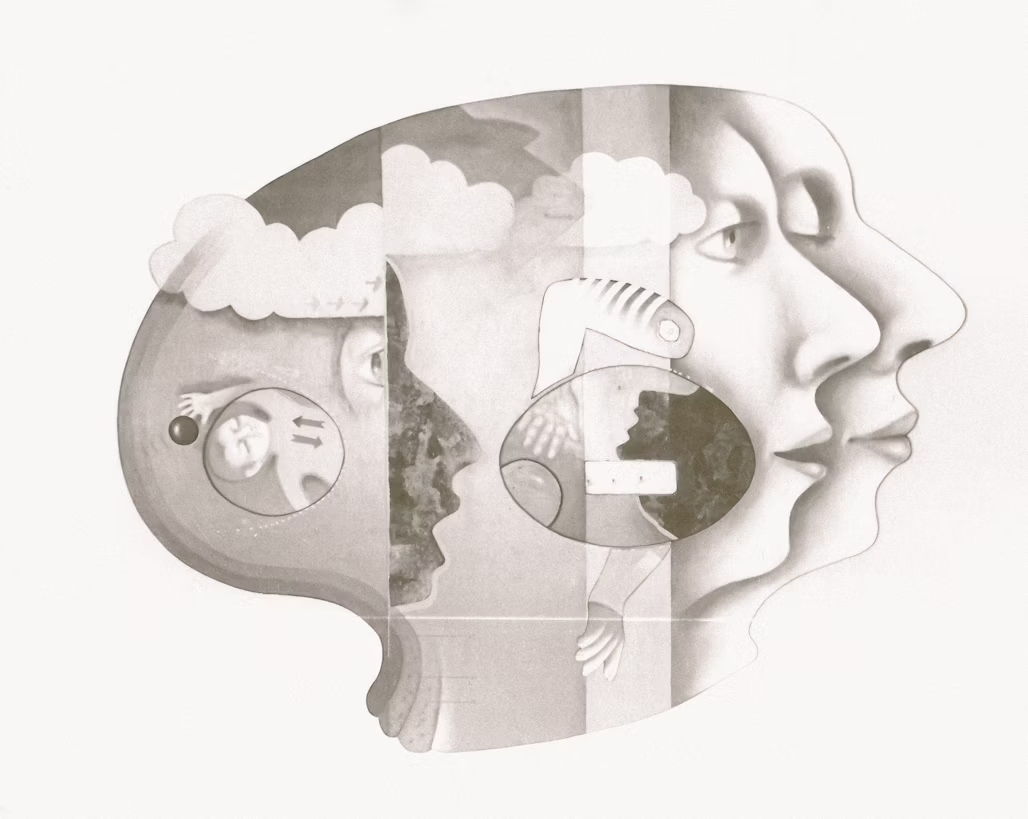
Ways to develop new hypotheses about human psychology

How would you go about building improved models of human psychology so that you can better help people? It might seem nearly impossible at first, but data about psychology is all around us, and there are numerous approaches you could take to discover new insights. Here are 24 different methods you could use to better understand the way humans work. In each case, I use "trying to figure out new things about post-traumatic stress disorder (PTSD)" as an example. What techniques am I leaving out...
More

Who perpetrates sexual harassment and sexual assault, and who are the victims?

This piece was first written in 2017, and first appeared on my website on April 30, 2026. This essay is the second in a series examining sexual harassment and assault. The first essay can be read here, which also includes more information about the study participants. Sexual harassment and assault occur far too often. In this post, I explore what the predictors are of being a perpetrator and being a victim. In particular, I use linear regression to predict whether each person is a ...
More